Why AI Is Not a Feature for Quotation Factory – But a New Foundation
(Based on a recent livestream with Wim Dijkgraaf, founder & CEO of Quotation Factory)
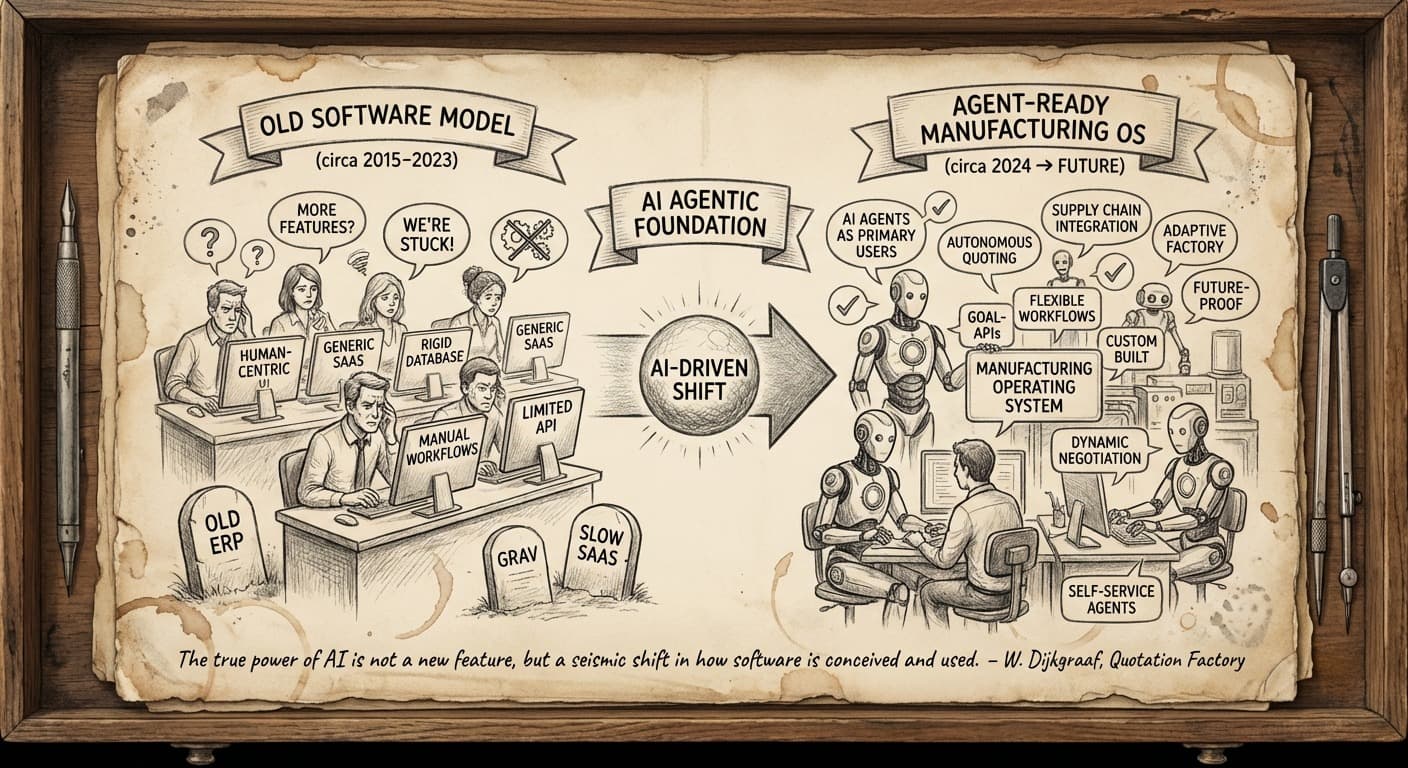
AI is not an extra feature you put on top of an existing SaaS solution. AI is a seismic shift in how software itself is conceived, built, and used.
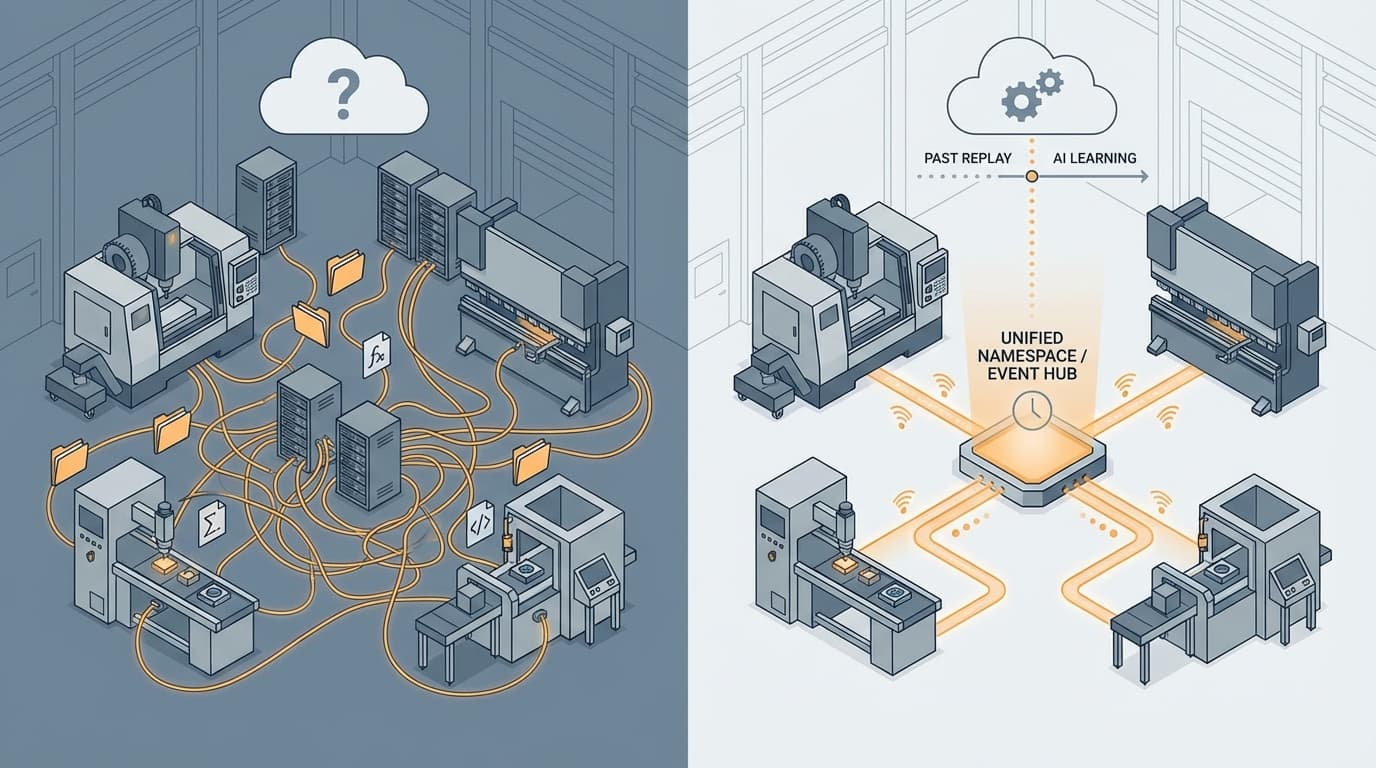
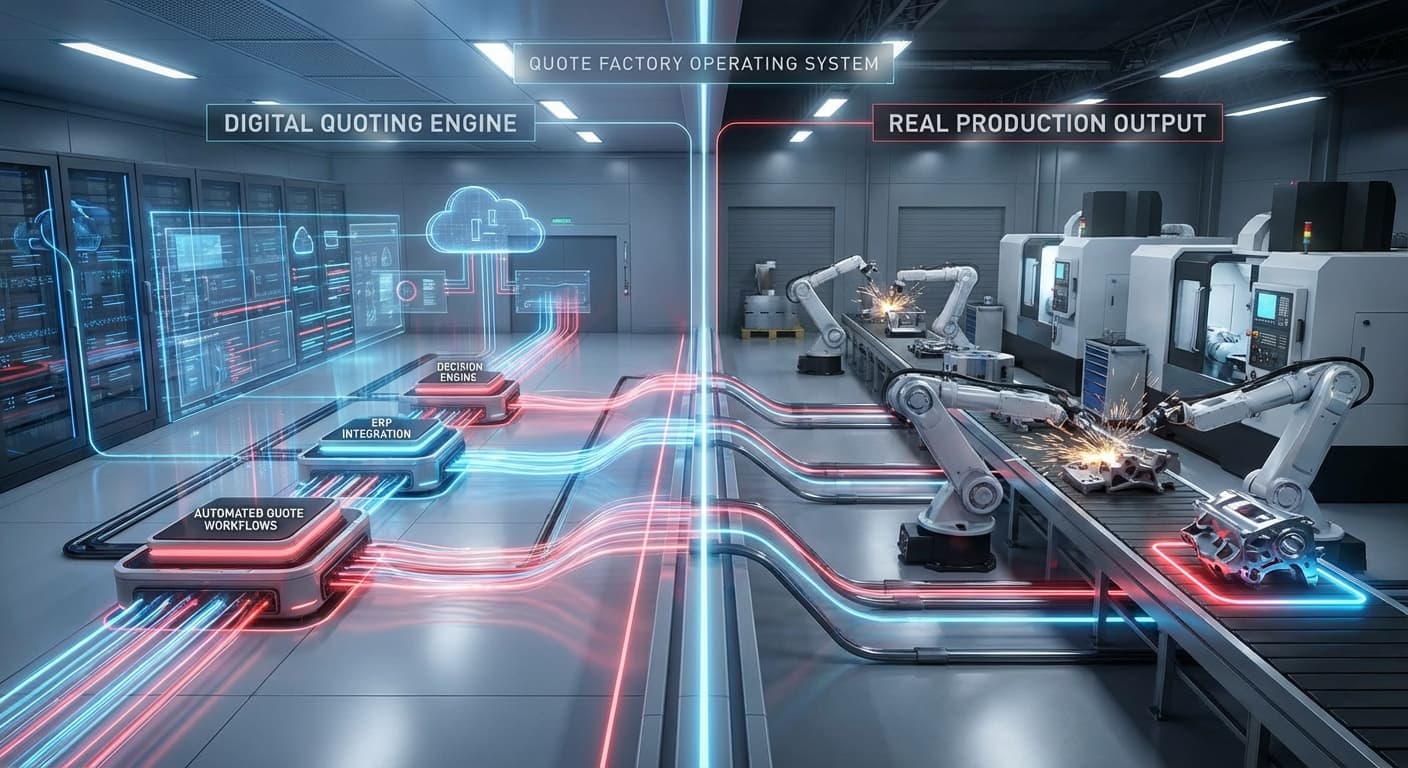
For Quotation Factory, that means one clear strategic response: we are not rushing to plaster "AI buttons" onto the UI. We are transforming into an agentic development company, rebuilding the platform's underlying architecture to be agent-ready, and evolving Quotation Factory into a Manufacturing Operating System for high-mix, low-volume manufacturers.
What follows is the thinking behind that choice - and what it means for metalworking companies in practice.
There are moments when you feel: now something truly shifts
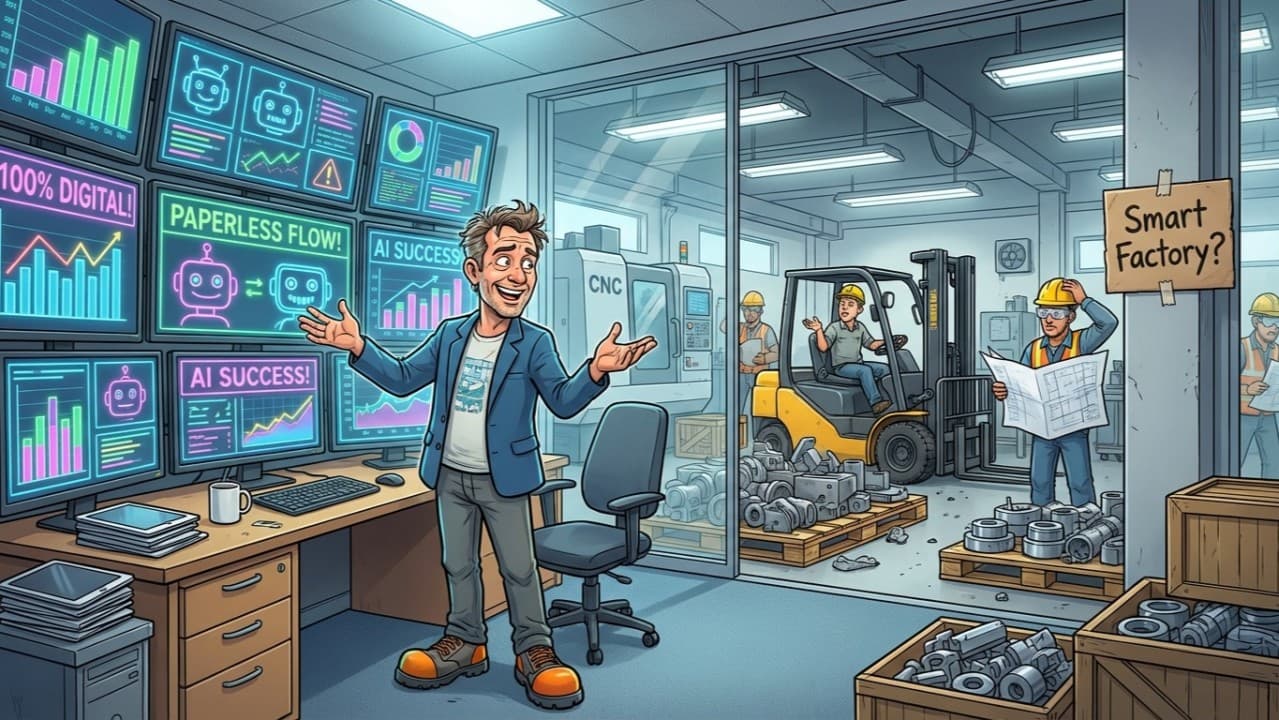
In recent years, there’s been a lot of talk about digitalisation, Industry 4.0 and AI. Plenty of buzzwords, plenty of promises.
But the last few weeks feel different.
With the arrival of the latest generative AI models from, among others, OpenAI and Anthropic, there has been a qualitative leap. Not just another button in your software, but a fundamental shift in how software is conceived, built and used.
In our world – that of high-mix, low-volume metalworking companies – this is not an interesting trend slide, but an existential question: What does this mean for the way you run your factory, create quotes and collaborate in your supply chain?
The misconception: “When will we get more AI features?”
In conversations with customers, prospects and investors, one question keeps coming back:
“When will we see more AI features in Quotation Factory?”
That question makes sense. Our platform is already full of intelligence today: automatic drawing interpretation, virtual factory, smart calculations, self-service for customers, integration with ERP and CAM, and more.
But that’s exactly where the misconception lies.
AI is not an extra feature you put on top of an existing SaaS solution. AI is a seismic shift in how software itself comes into being.
If we approach AI as “just another module”, we make two mistakes:
- We underestimate the impact on the business model of SaaS software.
- We miss the opportunity to make our factory systems truly future-proof.
From self-service portal to AI agents as primary users
A few years ago, we already said: self-service portals as we know them will disappear – but self-service will become more important than ever.
Self-service portals have been hugely valuable:
- they force you to extract knowledge from the heads of estimators and salespeople,
- and store it in systems and structures,
- creating the foundation for automation and now for AI.
But the real shift is not “more customers filling in a portal”.
The real shift is: the user of software is changing.
That user will increasingly be less a human behind a screen, and more an AI agent that, on behalf of companies:
- requests quotes,
- purchases and negotiates,
- exchanges data across the chain,
- and collaborates across different systems.
Self-service remains, but becomes self-service between agents. Agents will need to be able to serve themselves.
This means we must design Quotation Factory not only for humans, but for a future in which agents are the primary users.
Why our current software architecture isn’t enough
Our platform is fully cloud-native and built on modern architectural principles. Yet that’s not enough for the world that’s emerging now.
Under the hood, a lot has to change:
- Today, our APIs are still designed with human interaction as the starting point.
- Workflows assume clicking, entering, confirming – human behaviour.
- AI agents resemble people, but they work just differently enough: with different goals, rhythms and interaction patterns.
To be “agent ready”, APIs and workflows must:
- be less UI-driven and more goal- and outcome-driven,
- be robust enough to be operated by agents,
- be standardised yet flexible enough to be adapted by generative tools.
This is not a cosmetic update, but a redesign of the underlying layer of the platform.
SaaS business models under pressure
In parallel, we see another hard reality: the classic SaaS business model is under heavy pressure.
Where software companies used to be valued at 15–16× Annual Recurring Revenue, this has dropped in recent years to around 6×.
With the rise of generative AI, we see another strong correction: a large part of the traditional SaaS value proposition – “we have the database with a UI on top” – is being eroded.
Because many of those systems – think CRM, ERP, MES-type solutions – are essentially databases with screens.
And that is exactly what AI, under human guidance, is getting better and better at generating:
- custom software that perfectly fits the workflow of a specific factory,
- without the limitations of generic packages,
- and without the illusion of “the perfect standard system”, which in practice never fits perfectly.
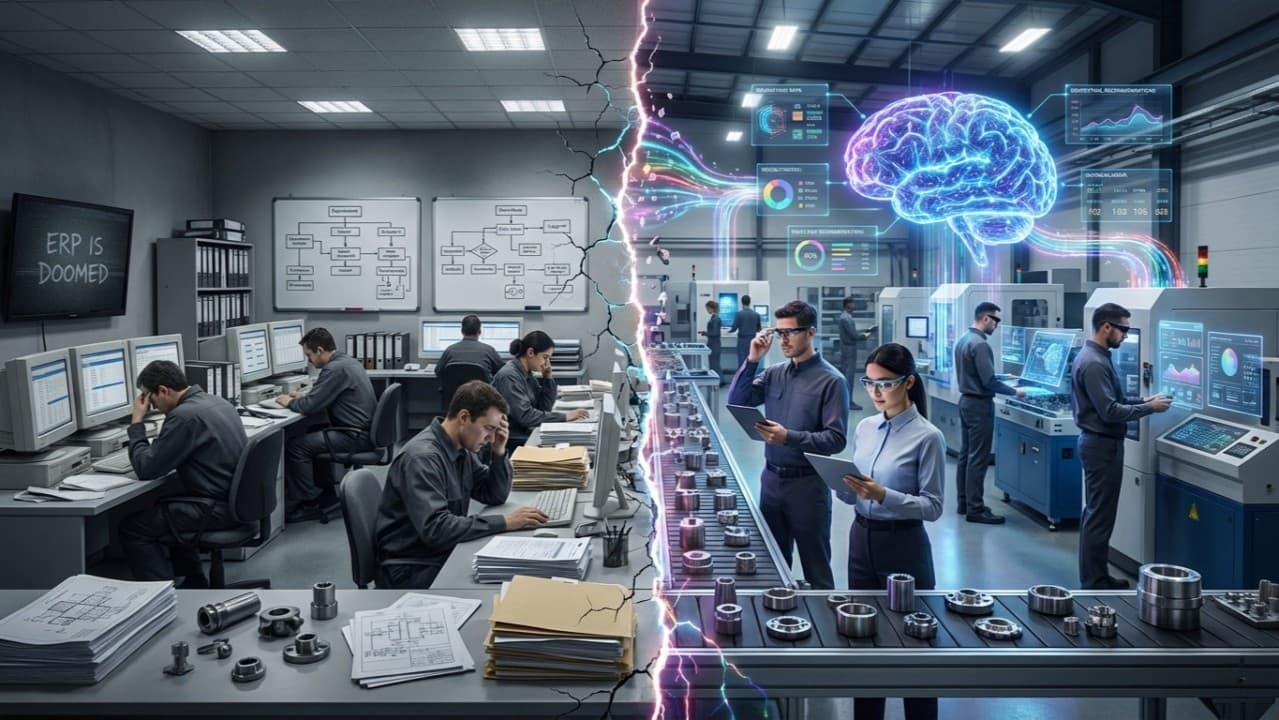
That’s also why we’ve been saying for some time: “ERP, as we know it today, is doomed.”
Not because the function of ERP disappears, but because the way it’s built – sluggish, not truly cloud-native, not very adaptive – hasn’t kept up with the possibilities of generative AI.
Our choice: become an agentic development company first
The logical follow-up question is:
“So what will Quotation Factory itself do with AI?”
The short answer:
- Our focus is not to plaster “more AI buttons” onto the UI as quickly as possible.
- Our focus is to transform Quotation Factory into an agentic development company.
Concretely, this means:
-
We make our own development organisation agentic We adapt our tools, processes and architecture so that we ourselves can design, build and maintain software with AI agents.
-
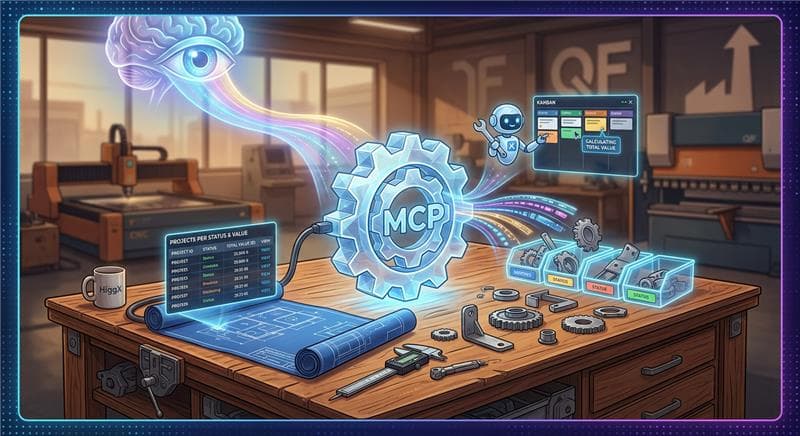
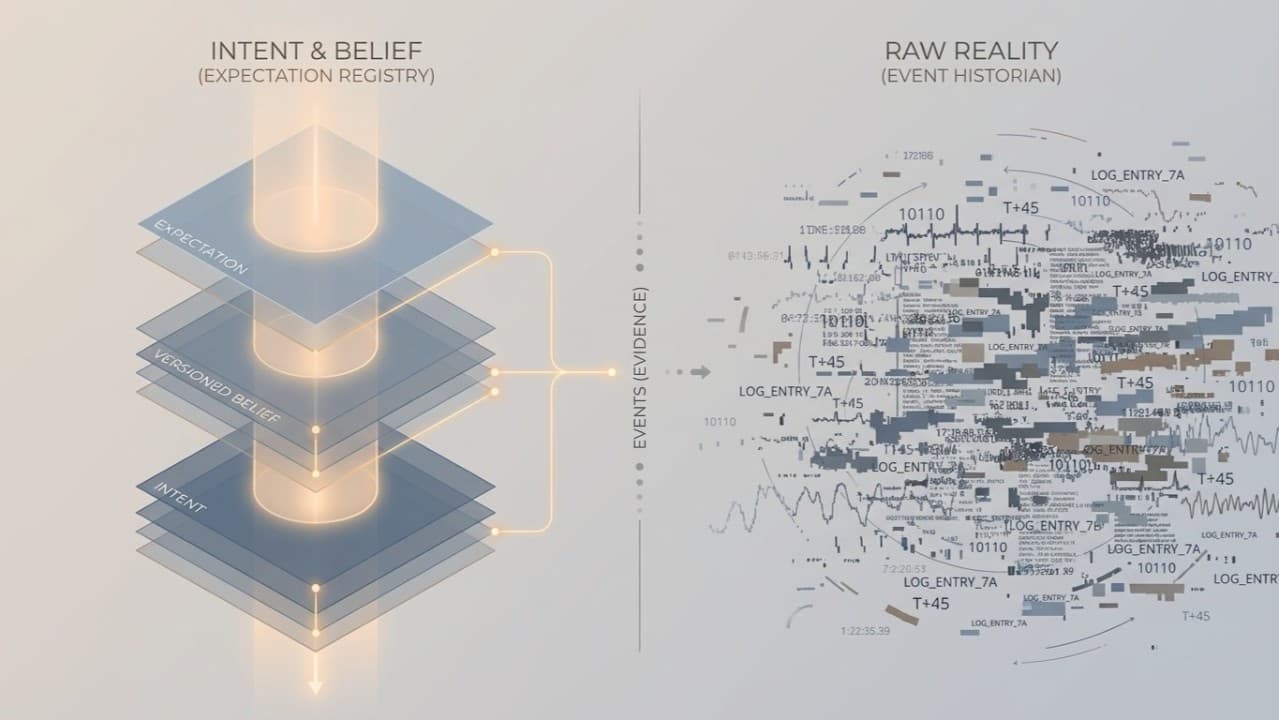
We make the platform under the hood agent-ready API structures, workflow definitions and integration layers are being made suitable for use by agents – not just humans.
-
We build towards a Manufacturing Operating System Quotation Factory will not be “just another quoting tool”, but the manufacturing operating system for high-mix, low-volume manufacturers in the metal industry.
On that operating system, agentic workflows will be able to run that:
- calculate,
- purchase,
- negotiate,
- prepare work,
- and dynamically move with the reality on the shop floor.
Not by having one monolithic system dictate how things must be done, but by letting companies themselves – “al vibe coding” – build their own digital factory on a solid foundation.
Why this is not a “nice to have” but urgent
This is not a fun innovation project for five years from now.
If we’re honest: we should already have been here yesterday.
AI developments are moving so fast that:
- companies who remain stuck in classic SaaS models and portals
- will structurally lose speed, flexibility and margins,
while competitors who work agentically:
- can build new workflows faster,
- are less dependent on scarce expertise,
- and structure their data and processes in such a way that they can keep playing the “infinite game” of industry.
That is exactly what our mission has been about for some time now: helping metalworking companies not only perform optimally today, but also remain relevant tomorrow in a game where the rules are constantly changing.
Average versus leading teams
We see a clear contrast here:
-
Average teams mainly ask: “Can you add an AI feature that will speed up [X]?”
-
Leading teams ask: “How should we design our processes, data and systems so that we and our customers are ready for a world full of AI agents?”
Those latter teams are the ones we focus on: mid-sized metal companies with enough variety in their work and the ambition to truly digitise their chain, and who understand that structure, standardisation and automation are the foundation for everything that follows.
What does this mean for you as a (future) customer?
If you’re a customer – or considering becoming one – this is the essence of our course:
- In the short term, you’ll already see practical improvements in workflows, integrations and automation.
- But the big leap lies in how we are rebuilding Quotation Factory into a platform that can be used by both humans and AI agents.
- Not just to create quotes faster, but to better position your entire company in an increasingly connected, digital manufacturing landscape.
We are building towards a future where you don’t buy one rigid system, but an operating system on which you can continue to develop indefinitely.
Soft close, open invitation
All of this doesn’t start with technology, but with a conversation about your reality:
- how you create quotes today,
- where you get stuck in work preparation and supply-chain collaboration,
- and what role you see for AI in your factory.
Would you like to explore what an agent-ready manufacturing operating system could mean for your high-mix, low-volume company? Send us a message or get in touch with your Quotation Factory contact person – we’d be happy to think along with you about the next step.