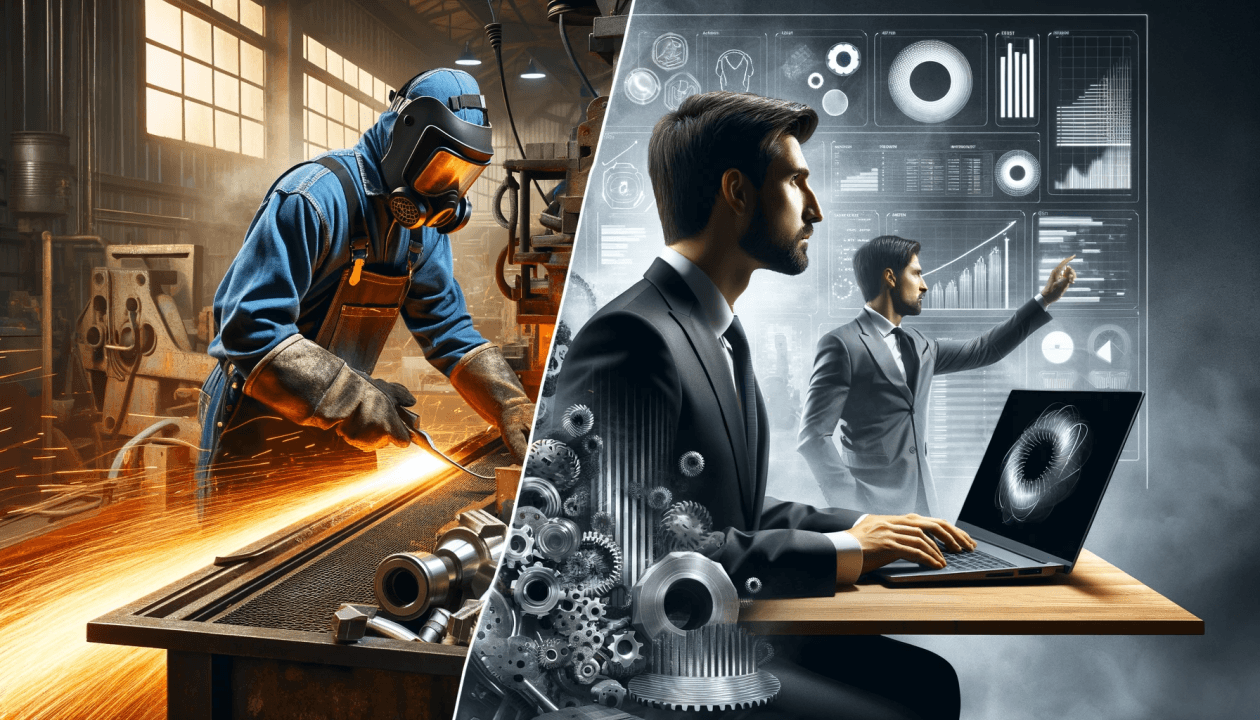
Manufacturing Evolution: Lessons from Our Primate Cousins
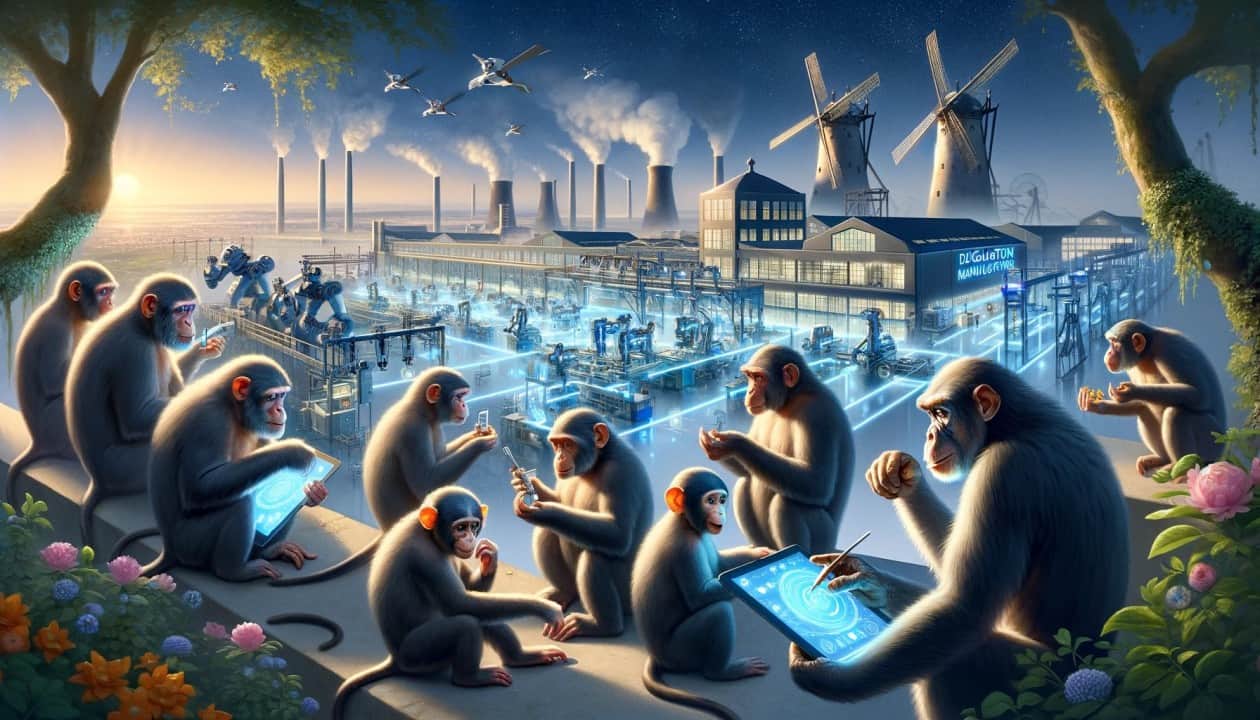
Once upon a time, in the heart of the Netherlands, there was a metalworking company known for its precision and innovation. The owner, Pieter, was a diligent man who had built his business from the ground up, navigating through the complexities of the European manufacturing industry with a mix of intuition and experience. Over the years, Pieter became a regular at various business events, mingling with speakers and other business owners, and discussing the future of manufacturing in Europe.
These gatherings were melting pots of ideas, where the latest trends were debated, and the future of the industry was envisioned. Yet, despite his involvement, Pieter often felt like an outsider looking in, struggling to grasp the undercurrents that influenced the discussions, especially those concerning the European digitalization agenda.
One quiet morning, Pieter was sipping his coffee and browsing through the latest news when he stumbled upon an article that announced the sudden death of the Dutch scientist Frans de Waal. The article detailed de Waal's pioneering work on primate behavior and his theory on social structures. As Pieter read about the theory, a light bulb went off in his head. He realized that he was part of a mechanism similar to what de Waal described, but within the context of the manufacturing industry and the politics surrounding digitalization.
In a way of daydreaming, Pieter began to apply de Waal's theory to his observations from the business events, step by step filling in the blanks for every aspect of the theory:
-
Most opinion makers are males: Pieter recognized that the most vocal and influential figures at these events were predominantly male. They set the tone for discussions and often determined the topics that were deemed important. This realization made him more aware of the need to seek out and listen to diverse voices to gain a fuller understanding of the industry's landscape.
-
They have a hierarchy: The business owner noticed a clear hierarchy among the participants, with certain individuals and companies wielding more influence over decisions and discussions than others. By identifying these key players, Pieter began to understand how decisions were made and how he could better position his company within this hierarchy.
-
They close coalitions: Pieter saw that alliances were formed not just based on business interests, but also on shared visions for the future of manufacturing. Recognizing these coalitions helped him understand the dynamics at play and the importance of forming strategic partnerships.
-
They defend their children: Ideas and projects were fiercely defended by their 'parents,' much like how primates protect their offspring. Pieter realized that understanding the emotional investment behind certain initiatives could provide insights into potential collaborations or conflicts.
-
Sometimes it's war: Lastly, he understood that conflicts and debates were natural and even necessary for the evolution of the industry. By seeing these confrontations as part of a larger process, Pieter learned to navigate them more strategically, using them as opportunities to advocate for his company's interests.
Armed with these insights, Pieter began to view the industry landscape through a new lens. He developed a more realistic and straightforward strategy for his company, focusing on building alliances, identifying key influencers, and positioning his company within the digitalization agenda. This newfound clarity not only helped Pieter make more informed decisions but also solidified his company's place in the future of European manufacturing. Inspired by de Waal's theory, Pieter navigated the complex social dynamics of the business world with a deeper understanding, ensuring his company thrived in an ever-evolving industry.